




Home
   
   
Wednesday, 17 March 2010
 

We've Moved!

Now visit us at: www.TheAppalachianOnline.com

Old Archives will contine to be served from this address.


Faculty Senate discusses First Amendment rights Print E-mail
Wednesday, 16 April 2008
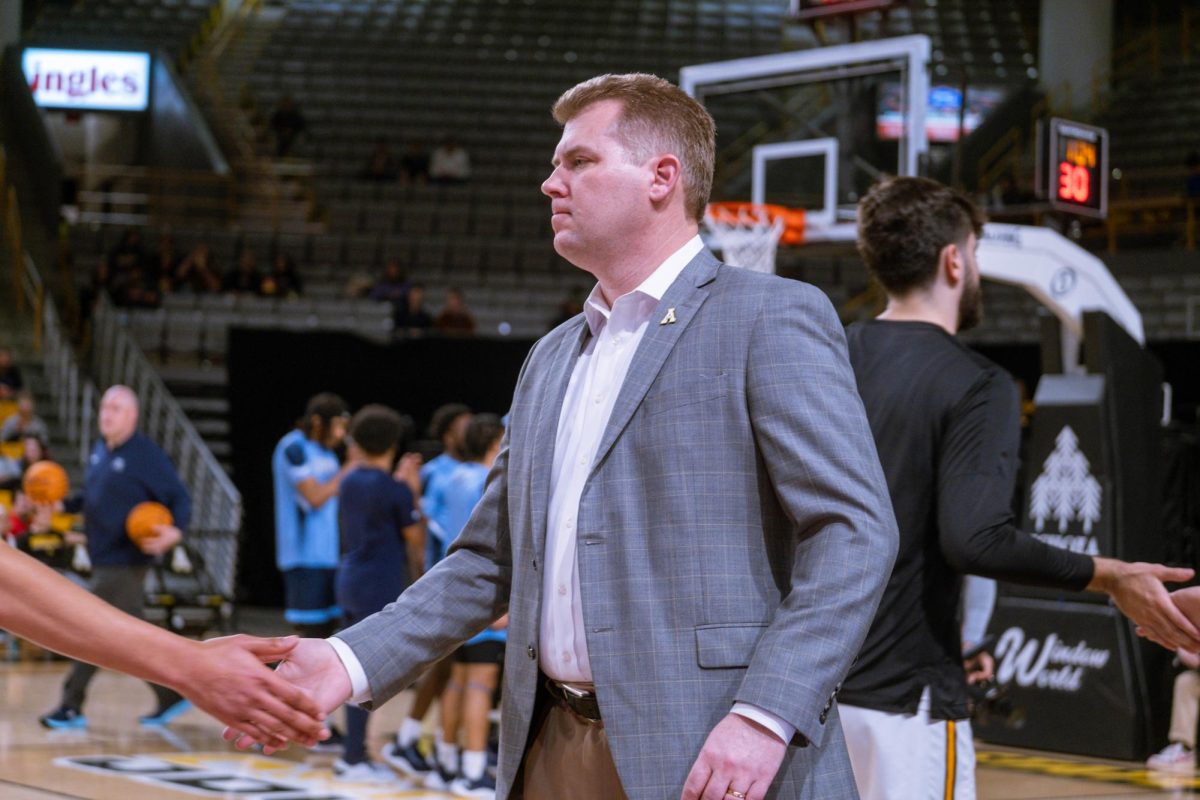
Jammie Price, a professor in the sociology department, voices her concerns as to what could be banned in faculty offices at Appalachian State University. Photo by Holt Menzies

by BRITTANY PENLAND
Intern News Reporter

In the wake of Chancellor Kenneth E. Peacock’s press release regarding a noose hung on campus, the Faculty Senate met Monday to discuss the First Amendment and symbolic expression in state offices.

Appalachian State University Attorney David Larry presented the First Amendment, along with various court cases, to the senate. He also explained appropriate and inappropriate displays in an employee’s office, as well as what professors are allowed to teach. 

“The purpose of this [presentation] is not to create intimidation. The intent is to overt people to the legal parameters to the issues of expression in our offices,” Larry said.

The Supreme Court states in Rosenberger v. University of Virginia “a state university may, consistent with the First Amendment, restrict what a professor may teach in the classroom.”


“When the university decides what it is teaching, we as individuals are essentially mouth pieces for the
state,” Larry said.


According to the First Amendment, a public employee who speaks “as a private citizen…on a matter of public concern” is protected.


However, if a public employee’s interest is inappropriate in the workplace, the court can “outweigh” the
Active Image
Larry
First Amendment, Larry said.


“I think there has been quite a bit of over reaction; I am seeing it first hand in my own department,
where we are being told to take things out of our offices and off of our doors,” Faculty Senate member
and sociology professor Jammie L. Price said.  


Hostile environments pertain to any protected class, no matter race, sex, disability, marital status,
national origin, sexual orientation, political affiliation, and so on, Larry said.


“If we all go back and look at our bookshelves and look at the art on our wall, and say, could this
potentially offend somebody, it probably will,” Faculty Senate Secretary Allan G. Scherlen said. “So
where do you draw the line?”


To create a hostile environment, a two-pronged test is needed, Larry said.


First, someone in the protected class must experience an unease or distress, and second, a
reasonable person who experiences this environment must believe someone in a protected class may
find the environment hostile.


“…Our concern as a university about the rights, not only of the faculty members but of students and
people without power, suggests that we should at least be sensitive to the fact that we may be creating
environments that are hostile,” Larry said.


According to the Appalachian Policy Statement, “no person associated with the university in any
capacity shall use for his or her own financial benefit, or for any other personal purposes, university
facilities or property.”


“Bear in mind, our offices are state property, and the only reason we are given those offices is for us to
do our work in. You can’t use your office for personal purposes,” Larry said.
Trackback(0)
Comments (0)Add Comment

Write comment
You must be logged in to post a comment. Please register if you do not have an account yet.

busy
 
< Prev   Next >


© Copyright 1996 - 2009 ASU Student Publications